Because What We Say Matters
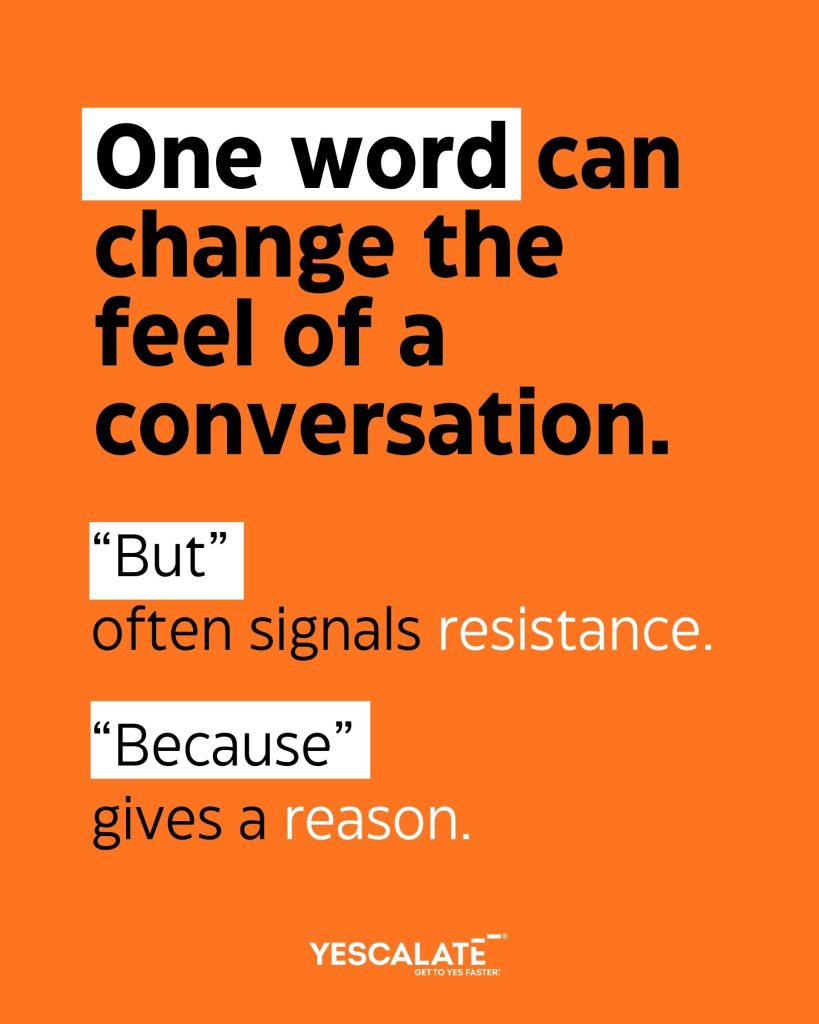
Sometimes one word changes the direction of a conversation.
This YESENTIALS® module is about two words: but and because.
Both are small. Both are common. And both send a signal.
The word because tells the brain there is a reason. It provides the why behind a request. In one of the most famous studies in social psychology, often called the copier machine study, adding the word because increased success from 60% to 94%.
This YESENTIALS® module is about two words: but and because.
Both are small. Both are common. And both send a signal.
The word because tells the brain there is a reason. It provides the why behind a request. In one of the most famous studies in social psychology, often called the copier machine study, adding the word because increased success from 60% to 94%.
The point is not that “because” is magic. The point is that people are more likely to engage when they understand the reason behind the request.
The word but can have the opposite effect. It often signals disagreement, contrast, or resistance. It can wipe out the sentence that came before it.
Think about the difference:
“We appreciate your effort, but we need to make a few changes.”
Compared to:
“We appreciate your effort, and because of that, we need to make a few changes.”
The second version feels different. It does not avoid the issue. It simply provides a better frame. The conversation is no longer moving from praise to resistance. It is moving from appreciation to reason.
This matters in sales, service, leadership, project management, and everyday communication.
In sales, because helps explain why a next step matters.
In service, because helps customers understand the process.
In leadership, because helps teams understand the reason behind a decision.
In project work, because helps people understand the sequence and priority of the work.
The practice is simple:
- When making a request, use because and give the reason why.
- When you catch yourself using but, pause.
- Ask whether because would create more clarity and less resistance.
This is not about word games. It is about respect. People are more likely to move forward when they understand the reason.
Because what we say matters.
Because what we say matters.
Words Change Decisions: Give People A Reason
Here are some practical examples for your use:
Less Helpful:
“I understand what you’re saying, but we can’t do that.”
More Helpful:
“I understand what you’re saying, and because of how this process works, here is what we can do next.”
Less Helpful:
“You did a great job, but this needs to change.”
More Helpful:
“You did a great job, and because this matters, let’s look at one change that will make it stronger.”
Less Helpful:
“I want to help, but I need more information.”
More Helpful:
“I want to help, and because I want to give you the right answer, I need a little more information.”
Less Helpful:
“We can do that, but it will take longer.”
More Helpful:
“We can do that, and because it requires a few extra steps, here is the timeline.”
Less Helpful:
“That is a good idea, but we need approval.”
More Helpful:
“That is a good idea, and because approval matters here, let’s identify who needs to be involved.”
Because: not a trick, not a script, not manipulation. It is the practice of giving people the reason why so the next step feels clearer, fairer, and easier to engage with.
“I understand what you’re saying, but we can’t do that.”
More Helpful:
“I understand what you’re saying, and because of how this process works, here is what we can do next.”
Less Helpful:
“You did a great job, but this needs to change.”
More Helpful:
“You did a great job, and because this matters, let’s look at one change that will make it stronger.”
Less Helpful:
“I want to help, but I need more information.”
More Helpful:
“I want to help, and because I want to give you the right answer, I need a little more information.”
Less Helpful:
“We can do that, but it will take longer.”
More Helpful:
“We can do that, and because it requires a few extra steps, here is the timeline.”
Less Helpful:
“That is a good idea, but we need approval.”
More Helpful:
“That is a good idea, and because approval matters here, let’s identify who needs to be involved.”
Because: not a trick, not a script, not manipulation. It is the practice of giving people the reason why so the next step feels clearer, fairer, and easier to engage with.
This week: before your next important email, meeting, or customer conversation, be conscious of where you might say but and ask, “Can I replace this with because and give a valid reason why?”
Because what we say makes a difference.