CONTEXT Changes Perception
What comes first changes how everything else is experienced.
In behavioral science, this shows up as framing, anchoring, contrast effects, and reference points. Different language, same principle:
People don’t evaluate things in isolation. They evaluate them in context.
That means your price, your proposal, your timeline—even you—will always be compared to something.
The only real question is:
Did you choose the comparison, or did they?
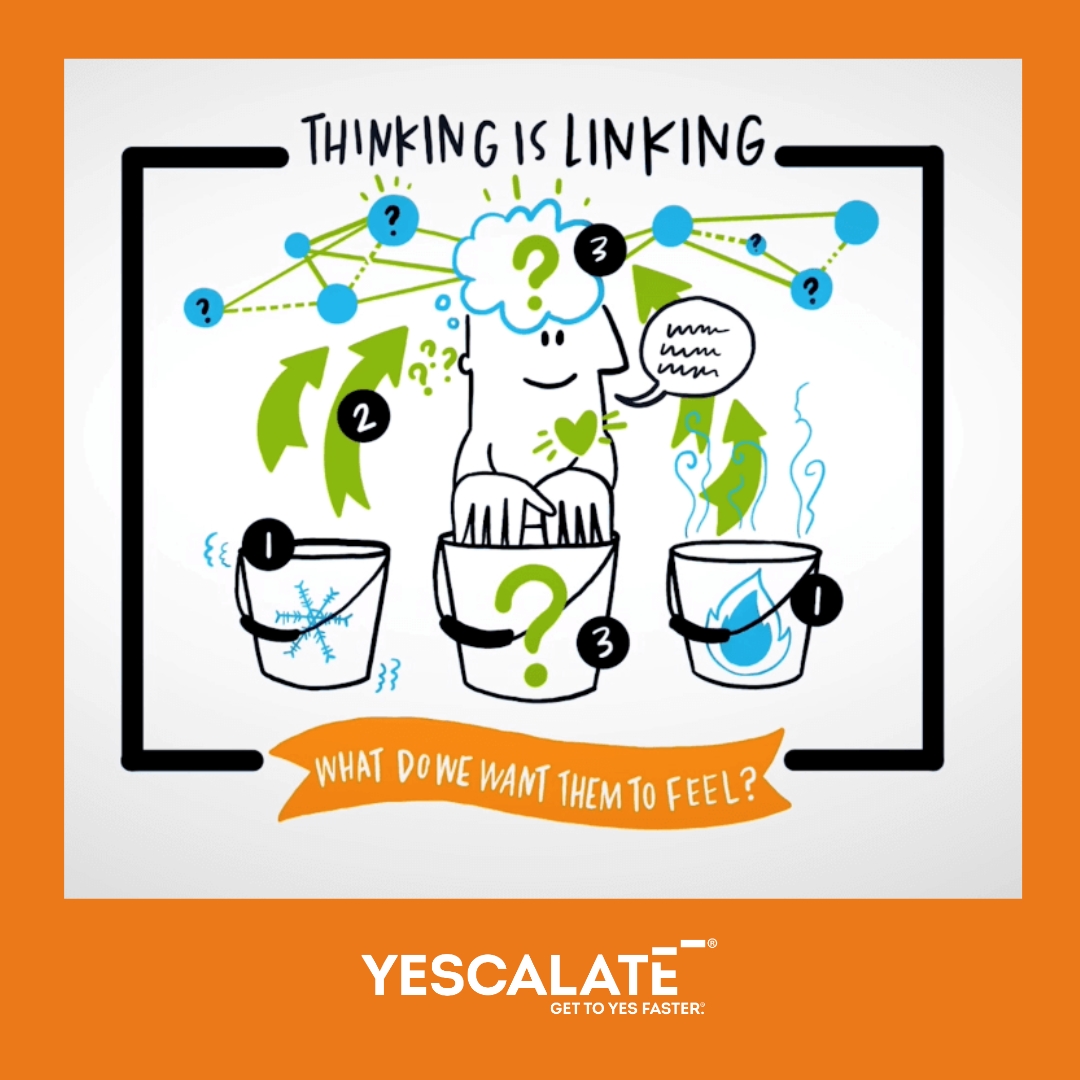
The Three Buckets
To make CONTEXT practical, think in three simple buckets:
- What they see first
The question, visual, or idea that sets the frame. - What they compare it to
The reference point that gives meaning to your offer. - What they feel
The emotional response that drives the decision.
Most people focus on the outcome. But the outcome is shaped upstream.
Why Context Matters
People are constantly asking: “Compared to what?”
If you don’t define that reference point, they will.
And once it’s set, everything you say next gets filtered through it.
A Simple Example
Walk into a finance office at a dealership and the default CONTEXT is:
“They’re about to upsell me.”
That creates skepticism before the conversation even starts.
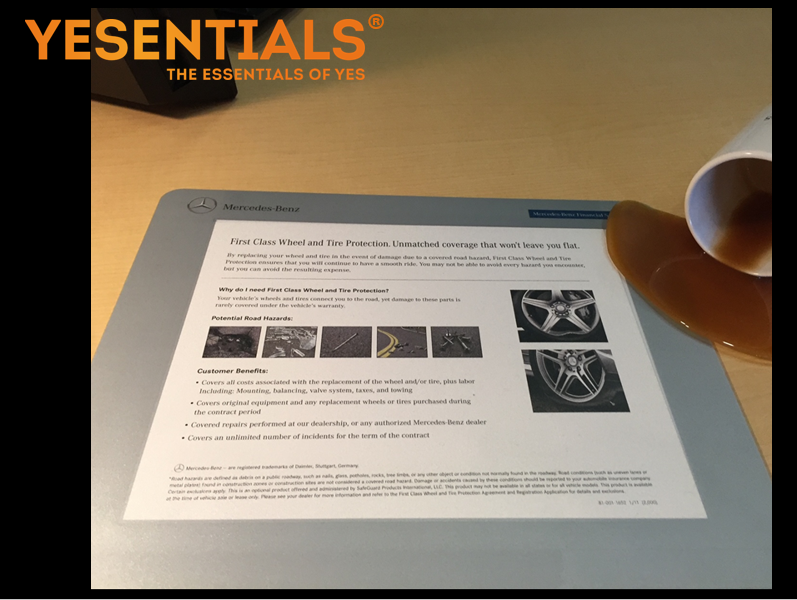
Mercedes shifted that CONTEXT with something simple:
A spilled cup of coffee.
A visual of damaged tires.
A headline: “Accidents happen.”
Same product. Different perception. Because the CONTEXT changed.
A Better Way To Think About It
Before your next conversation, consider this:
What do you want them to feel?
And more importantly—
What are they experiencing before they ever get to your message?
That moment—before you present—is where most decisions are shaped.
The Bottom Line
People will always compare. They will always anchor. They will always interpret through a frame.
If you don’t set the CONTEXT, someone else will.
If This Resonates
This is one piece of a larger system we teach inside YESENTIALS®—focused on how people actually think, decide, and act in real-world conversations.
Because better decisions don’t come from more information. They come from better CONTEXT.